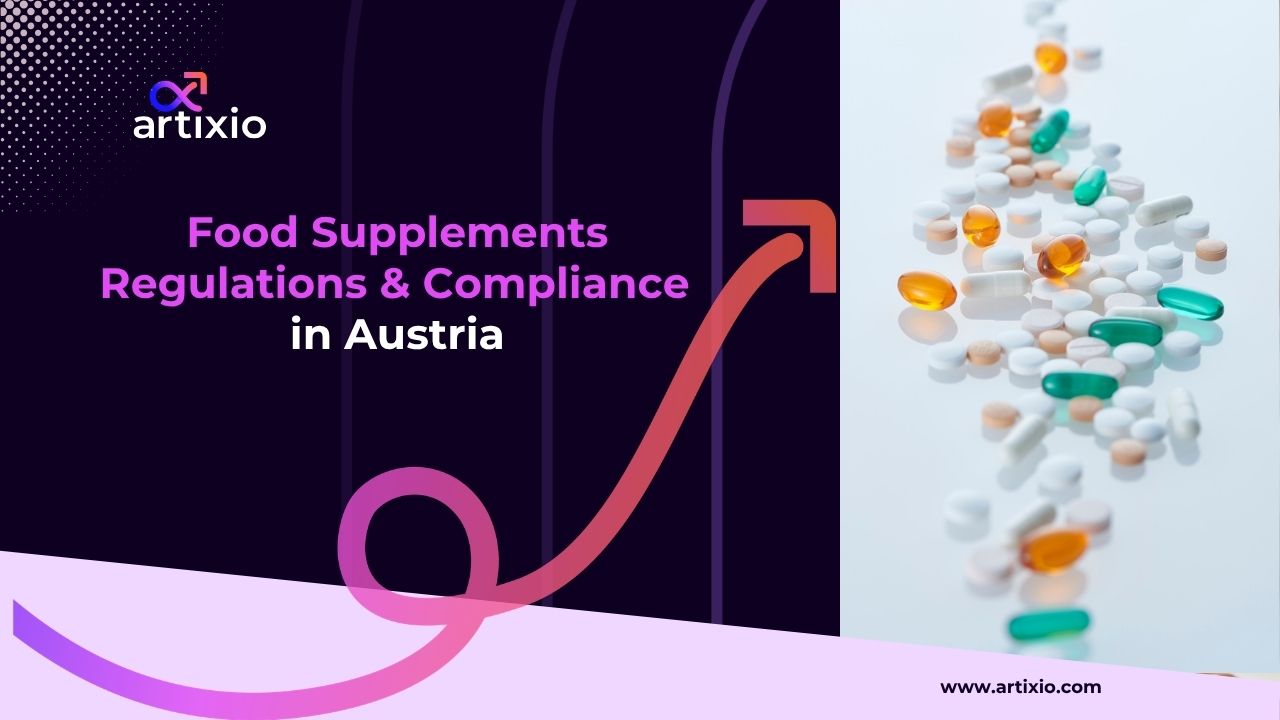
Bringing food supplements to the Austrian market isn’t as plain as it seems. Due to high levels of vitamins, zinc, tetrahydrocannabinol (THC), or microbial contamination, they are considered “not safe”. This can lead to objections from the authorities. Further, problems with complex labelling and composition standards can make it hard, too.
So, ensuring their compliance requires clarity on what classifies as food or dietary supplements and also keeping an eye on the applicable regulations. Let’s look into the details of their compliance in this guide.
Regulatory Authority for Food Supplements in Austria
The Austrian Agency for Health and Food Safety (AGES) is the regulatory authority for food supplements in Austria. It supervises the market, tests the product, and enforces relevant regulations.
What Are Food Supplements Under Austrian Regulations?
Food supplements are not medications and do not claim to cure, treat, or prevent diseases. According to Austrian legislation, a food supplement is a food that’s intended for use as a supplement to a normal diet.
They are packed with concentrated nutrients or with a substance that has a nutritional or physiological effect and are sold by measured dose. Their ingredients include vitamins and minerals, amino acids and fatty acids, and plant extracts and constituents.
Who can take Dietary Supplements?
A healthy average population doesn’t need to consume these supplements from a nutritional standpoint. Their temporary consumption can be helpful to the following groups:
- Women wishing to become pregnant
- Pregnant women
- High-performance athletes
- People with an unbalanced diet
- Vegans
Sick people should take these supplements on the recommendation of their physician.
Food Supplements Regulatory Process in Austria
Food supplements in Austria have needed no registration or notification process since 2006. But once the product enters the market, it is inspected for safety. In Austria, approximately 450 food samples have gone through inspections in recent years. One-third of these samples have been objected to labelling problems, especially incorrect or unauthorised health claims.
Market Entry for Food Supplement Requirements in Austria
Companies should follow the guide below and ensure compliance with all to make their product market-ready and pass the safety inspection.
1. Find Out What Category the Product Belongs To
The product should be deemed a food supplement, not a medicine, because it doesn’t have disease treatment or prevention properties. Further classification has been provided above in the blog.
2. Check Ingredient Compliance
Assess compliance with Directive 2002/46/EC, Novel Food Regulation (EU) 2015/2283, and Regulation (EC) No. 1925/2006 on restricted substances. Austria is an active rejector of products containing unauthorised foods and/or unsafe levels of food ingredients.
The Austrian government publishes recommendations concerning the following:
- Quantities of vitamins and minerals in food supplements;
- Tolerances when assessing vitamin and mineral content; and
- The use of plants and plant parts in food supplements.
This means formulation review should consider both the binding legal requirements and relevant Austrian official recommendations.
3. Review German-Compliant & Labelling Requirements
The product’s labelling, presentation, or advertising should not state or provide any impression that the intake of adequate nutrients is not possible in a balanced, varied diet. Labels must include the following information:
- Recommended daily intake for the consumption
- Labelling nutrients or other substance names
- Caution: not to exceed the recommended daily dose
- Statement that supplements are not substitutes for a varied diet
- Child safety warning that products must be stored out of their reach
- Nutrient amounts and NRVs (when applicable)
Further, food supplements should not contain any “cosmetic” recommendations for use.
4. Validation of Health and Nutrition Claims in Austria
The European Food Safety Authority (EFSA) reviews health claims on dietary supplements. The claims made on the product should be in line with chapters II, III, and the annex of the “Health Claims Regulation”. Further, claims that are misleading and/or food-or-disease-related are not acceptable.
5. GMP Requirements
Manufacturers have to put in place hygienic procedures based on HACCP and traceability. They should maintain the following:
- Batch traceability records
- Certificates of Analysis (CoAs)
- Records of microbiological and contaminant tests
- Raw material and supplier documentation
- Quality and storage controls
6. Keep Proper Documentation
Companies should maintain the formulation and specification-related details of their product. They should have complete information on ingredients and formulations, testing reports (if any), safety and traceability records, and GMP documentation. These documents could be requested at inspections or during official review.
7. Ensure Import and EU Operator Compliance
Identifying the appropriate food business operator is an important part of market entry for companies based outside the EU. Under Article 8 of Regulation (EU) No. 1169/2011, the food business operator responsible for food information is generally the operator under whose name the food is marketed. If that operator is not established in the EU, the importer into the Union market is responsible for the food information.
The responsible operator must ensure that the required food information is present and accurate in accordance with applicable food-information law. This is particularly relevant to manufacturers outside the EU that intend to supply food supplements to Austrian consumers.
8. Monitor Post-Market Compliance
AGES regularly tests supplements for labelling violations, unauthorised claims, unsafe nutrient levels, microbial contamination, and novel food non-compliance. So, make sure your company keeps up to date with the compliance regulations.
Conclusion
Import controls, German labelling requirements, and EU operator obligations create additional compliance requirements for non-EU manufacturers.
Artixio can help you with it. We provide regulatory assessment, labelling review, claims compliance, and market entry support for supplement companies in Austria and other EU markets. Companies can contact Artixio at info@artixio.com.
FAQs
1. Do food supplements have to be labelled in German in Austria?
Yes. Mandatory food information and supplement warnings must be provided in German for products sold in Austria.
2. What are the licensing requirements for food supplements in Austria?
Food supplements are not subject to a separate product licence or notification in Austria. But companies need to make sure of the following:
- Ingredients are allowed for supplementation
- Labels and food claims are compliant with EU and Austrian rules
- An EU-based importer or a food business operator is identified for non-EU products
3. What is the food supplement registration cost in Austria?
Food supplements are not subject to registration or notification fees in Austria. However, companies can keep a budget for the following:
- Assessment of ingredients or novel foods
- Label and claims review
- German label translation
- Product testing and CoAs
- GMP documentation
- Import, customs, and EU operator costs
- Regulatory consulting support
Products may require reformulation or medicinal classification review, which can increase costs.
4. What is the food supplement registration timeline in Austria?
Food supplements in Austria are not subject to pre-market registration or approval. The timing for market entry may depend on the following:
- Ingredient and novel food assessment
- Label and claims review
- German label preparation
- Technical documentation readiness
- Import and customs clearance
5. When are food supplements considered “not safe”?
Food supplements are considered unsafe or unsuitable for human consumption when they have excessively high content of tetrahydrocannabinol (THC). There can also be microbial contamination or extremely high vitamin content, which exceeds EFSA levels. High levels of zinc, contamination with pathogenic bacterial strains, having unauthorised or unacceptable ingredients, and novel foods can also cause them to become “not safe”.